How We Trim and Shape Tall Shrubs and Small Trees Safely
Learn how we safely trim and shape tall lilacs and small maples—when to prune, what tools to use, and how to avoid damaging your shrubs and trees.
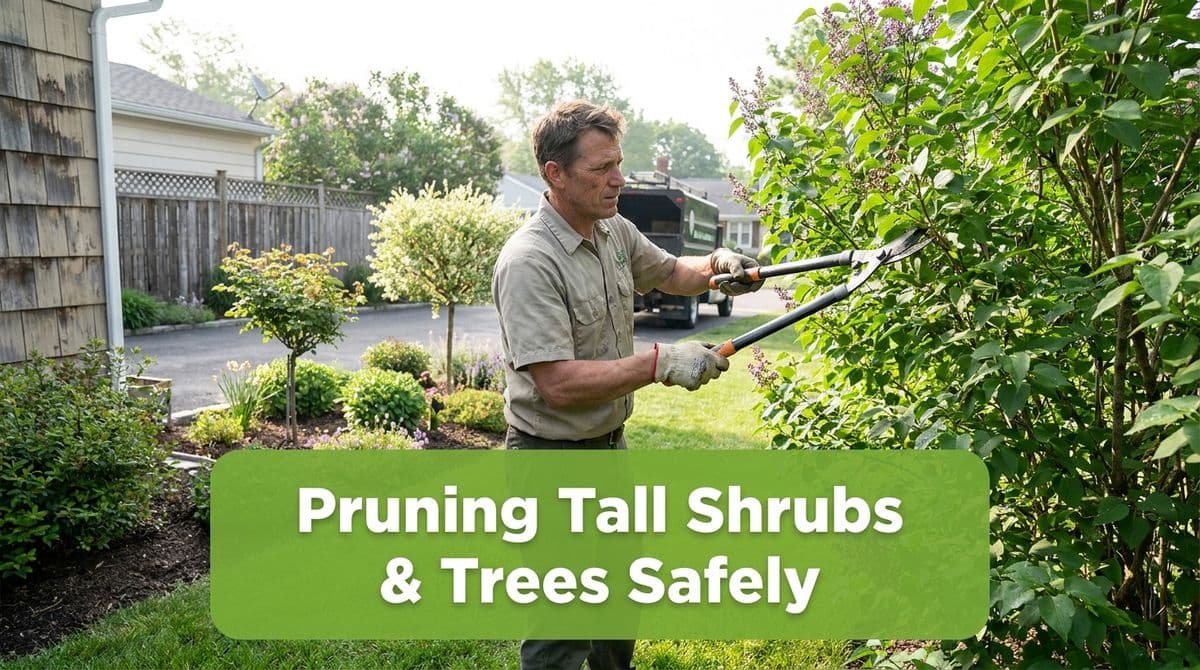
How a Simple Question About “Edging” Turned Into a Pruning Lesson
We recently got a call from a customer — let’s call her Linda — who asked a really specific question: could we “edge” her tall shrubs and small trees, kind of like people do with squared-off lilac hedges?
Linda had a row of amber maples that had just been topped. She didn’t need anyone touching the tops again — she wanted the sides cleaned up and shaped, almost like tall lilacs that are neatly edged all the way up. She also wanted to make sure whoever did it knew how to trim without butchering the plants.
Her questions are ones we hear a lot: How high can we safely trim without ladders? Can we shape tall lilacs and small maples without damaging them? And what tools and techniques actually keep these plants healthy instead of stressing them out?
Using Linda’s call as a guide, we want to walk you through how we approach trimming and shaping taller shrubs and small ornamental trees — like lilacs and maples — so you can understand the right way to do it.
Before You Trim: Height, Access, and Safety
One of the first things we talked through with Linda was reach. Like many residential crews, we typically trim only as high as we can safely reach from the ground with hand tools and pole trimmers — we don’t climb ladders for routine shrub shaping.
That’s an important starting point for any homeowner:
- Know your safe working height. If you can’t comfortably control your tool from the ground (even with a pole pruner), it’s time to call a professional who has the right equipment.
- Plan to work from the outside in. With taller shrubs and small trees, most of the shaping is done on the sides, not the top — exactly what Linda needed.
- Avoid ladders with power tools. A wobbly ladder plus a running trimmer is a recipe for both plant damage and personal injury.
Once you know you can safely reach the area you need to trim, you’re ready to think about tools and timing.
The Right Tools for Shaping Tall Lilacs and Small Maples
During the call, Linda asked if we had “a pole” to do the edging. What she was talking about is exactly what we often use: a pole pruner or a pole hedge trimmer.
For most homeowners, we recommend:
- Bypass hand pruners for small branches (up to about 3/4" thick).
- Loppers for slightly larger branches (up to about 1.5").
- Pole pruner or pole hedge trimmer for higher side growth you can’t reach by hand.
- Hand saw for thicker, older branches that need selective removal.
Whatever you use, keep the blades sharp and clean. Dull tools tear instead of cut, which makes it harder for the plant to heal and opens the door to disease.
When to Trim: Timing Matters for Lilacs vs. Maples
Another key piece we always clarify during a walkthrough is timing. Lilacs and maples don’t follow the same rulebook.
Timing for lilacs
For lilacs, the general guideline is:
- Right after blooming (late spring to very early summer) is the best time.
- Trim later in summer or fall and you’ll likely cut off next year’s flower buds.
So if your tall lilac hedge has gone wild, wait until it finishes blooming, then do your shaping.
Timing for small maples (like amber maples)
With ornamental maples, usually:
- Late winter (while dormant) or mid-summer (after the first flush of growth) is safest.
- Avoid heavy pruning in early spring, when sap flow can be strong, and in late fall, when fresh cuts can be vulnerable going into winter.
Light touch-up shaping — like the side edging Linda requested — can often be done more flexibly, as long as you’re not removing large limbs or over-thinning the canopy.
How We Shape a Tall Lilac Hedge Without Harming It
Let’s walk through how we’d handle an overgrown lilac that a homeowner wants squared off and cleaned up, similar to what Linda described with tall lilacs “edged all the way up.”
- Step back and picture the final shape.
We stand back and decide: Do we want a soft, rounded hedge or a more formal, squared look? For health, we usually keep the top slightly narrower than the base so sunlight can reach the lower branches. - Remove dead, crossing, and weak branches first.
Using hand pruners and loppers, we cut these right back to a live branch or the base. This opens the plant and often solves 30–40% of the “messy” look without touching the outer silhouette. - Gradually trim the outer shell.
We use hedge shears or a trimmer to very lightly take off the longest shoots, following an imaginary line. Think of it as giving the lilac a haircut, not a buzz cut. Multiple light passes are better than one aggressive one. - Thin a bit from the interior.
To prevent the hedge from becoming too dense and prone to mildew, we selectively remove a few interior branches. More light and air inside means healthier growth and better blooms. - Limit how much you remove.
On lilacs, we try not to remove more than about one-third of the total growth in a single season. If it’s severely overgrown, we plan a 2–3 year rejuvenation instead of a one-day makeover.
How We Edge the Sides of a Small Maple (Like Linda’s)
Linda’s amber maples had already been topped, so our focus would be exactly what she asked for: side shaping only, within safe reach from the ground.
- Define the no-go zones.
We start by deciding what won’t be touched: the top growth (already cut), any major structural limbs, and any branches with obvious stress or damage. - Mark the desired profile with our eyes.
From a few steps back, we visualize a smooth outline along the sides. Often, we aim for a gentle oval or slightly tapered column, rather than a perfectly flat wall, which can look harsh and stress the tree. - Use selective cuts, not shearing.
Unlike lilacs, maples usually respond better to selective pruning. We follow individual branches back to a natural fork and cut there, instead of just running a trimmer straight down the side. - Keep cuts small and clean.
Where possible, we remove smaller side twigs instead of big branches. For anything over about 1.5–2 inches in diameter, we stop and reconsider — larger wounds are slower to heal and can invite decay. - Check balance from multiple angles.
We walk around the tree after each round of cuts to make sure one side isn’t stripped bare. A well-shaped maple should look natural from all directions.
How Much Is Too Much? Trimming Limits to Protect Your Plants
A question hidden inside Linda’s concern — “if you don’t know how to do it, then you can’t do it” — is really about not overdoing it.
Our general rules of thumb:
- For established shrubs (like lilacs): Don’t remove more than one-third of the live growth in a year.
- For small ornamental trees (like maples): Keep annual pruning to light shaping and small-branch removal, unless you’re working with an arborist on a structured plan.
- Keep live foliage. Leaves are your plant’s food factories. Strip off too many at once and you stress the plant, sometimes fatally.
Cleanup and Aftercare: Helping Your Shrubs and Trees Recover
The job isn’t done when the last branch hits the ground. Proper cleanup and aftercare are a big part of keeping your lilacs and maples healthy.
Cleanup
- Remove all clippings from around the base. Leaving piles of branches and leaves can trap moisture and invite pests and fungus.
- Chip or bag debris. We usually chip larger branches or haul them away; smaller debris can be bagged for yard waste pickup.
- Inspect cuts. As we clean, we do a quick pass to make sure there are no ragged cuts that need to be tidied with a sharper tool.
Aftercare
- Water deeply but not constantly. If the weather is dry, a deep watering at the root zone once a week or so (depending on soil and weather) helps the plant recover.
- Skip heavy fertilizing right away. Too much fertilizer after pruning can encourage soft, weak new growth. For most established plants, regular soil health is more important than quick-feed fertilizer.
- Watch for stress signs. Over the next few weeks, we tell homeowners to look for yellowing leaves, dieback on branch tips, or wilting that doesn’t match weather conditions. Those can be signs the plant is struggling.
- Mulch correctly. A 2–3 inch layer of mulch, kept a few inches away from the trunk, helps conserve moisture and protect roots without rotting the bark.
When to Call in a Pro
With Linda, we recommended a walkthrough so we could see her amber maples and talk through her goals in person. That’s often the smartest move when:
- Your shrubs or trees are taller than you can safely reach, even with a pole tool.
- You’re not sure which branches are safe to remove without hurting the plant’s structure.
- The plant has history of topping or heavy pruning and you’re worried about long-term health.
- You want a very specific shape (like a tightly squared hedge) but don’t want to lose blooms or damage the tree.
With the right timing, tools, and a light touch, you can keep tall lilacs, amber maples, and other small trees looking crisp and well-shaped without sacrificing their health. And if you’d like us to walk your yard with you the way we did with Linda, we’re always happy to take a look and come up with a trimming plan that fits your plants — and your comfort level.