Why Sprinklers Suddenly Fail at Startup
Sprinkler system suddenly failing at spring startup? Learn the most common causes, what to safely check yourself, and when it’s time to call a pro.
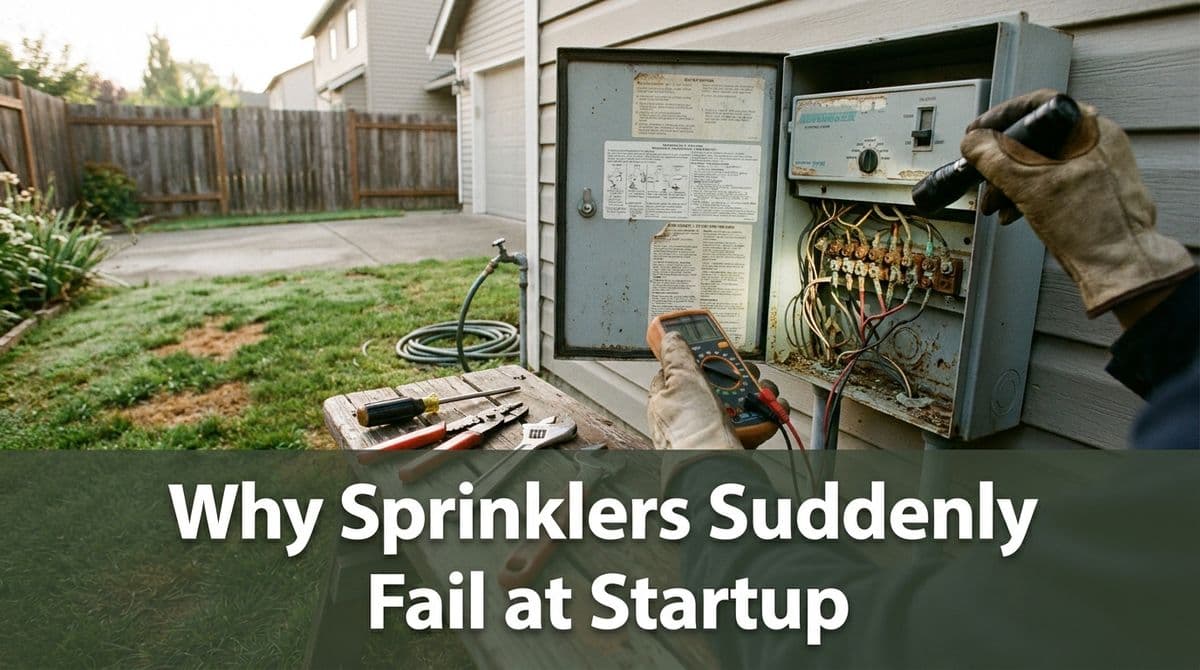
When a Long-Running Sprinkler System Suddenly Goes “Hog Wild”
We recently got a call from a customer — let’s call him Bill — who gave us a line we hear every spring: “This system has worked great for 30 years, and this year it decided to go hog wild. Everything broke.”
Bill’s situation is more common than most homeowners realize. A sprinkler system can run smoothly for years, then suddenly refuse to start up, leak everywhere, or act totally unpredictable the first time you turn it on for the season.
Since we handle a lot of spring startups and repairs, we see the same patterns over and over. In this post, we’ll walk through why a sprinkler system can suddenly fail at startup, what you can safely check yourself, and when it’s smarter to call in a pro.
Why Sprinklers Fail After Years of Working Fine
When we arrive for a spring startup, we often hear, “Nothing changed since last year.” But a lot actually does change while your system is sitting off through fall and winter.
Here are some of the most common reasons a system that “always worked” suddenly doesn’t:
- Winter damage – Even if it was blown out, a hard freeze can crack pipes, valves, and backflow devices.
- Age and wear – After 10–30 years, plastic parts get brittle, seals dry out, and wires corrode.
- Pressure changes – City water pressure can change year to year, which exposes weak spots.
- Yard work and digging – Aeration, landscaping, or fence work can nick pipes or cut control wires without anyone noticing at the time.
- Critters and roots – Tree roots, burrowing animals, and even insects can damage lines and valve boxes.
All of that shows up the same way to you: you turn on the water or the controller in spring, and zones don’t come on, heads don’t pop up, or you suddenly have a river in the yard.
Step 1: Start with the Safe, Simple Checks
When we visit a home like Bill’s, we always start with the basics. These are the things most homeowners can safely check before scheduling a repair call:
- Make sure the main sprinkler shutoff is fully open. Many systems have a separate shutoff in the basement, crawl space, or outside. If it’s only partway open, you’ll get weak pressure or zones that barely run.
- Check the backflow preventer valves. Those little handles on the backflow (usually a brass or bronze fixture outside) need to be in the correct open position. If they’re closed or half-closed, zones might not get enough water.
- Look at the controller settings. Make sure it’s not in “rain hold,” “off,” or set to the wrong days and times. Also confirm the start times haven’t been accidentally deleted or doubled.
- Test zones one at a time in manual mode. Manually run each zone for a minute. Note which ones don’t come on, which have low pressure, and which cause visible leaks.
If everything looks right here and the system still misbehaves, that’s when we start thinking about specific failure points.
Common Startup Problems and What They Usually Mean
When we’re out on spring routes, a “simple startup” often turns into repairs. Here are some of the patterns we see and what they’re likely telling you.
1. Nothing Comes On at All
If no zones run when the controller says they should, possible causes include:
- No power to the controller – Check the outlet, breaker, and any GFCI reset buttons.
- Blown controller fuse or bad transformer – Many timers have an internal fuse that can blow during a storm.
- Master valve or pump relay not working – If the master valve or pump doesn’t open, no water gets to the zones.
Homeowners can check power and breakers; beyond that, we usually recommend a pro to avoid wiring mistakes.
2. Some Zones Work, Others Don’t
This is extremely common after a system has been off all winter. Likely culprits are:
- Bad zone valve or solenoid – The electrical coil that opens a valve may have failed.
- Broken or disconnected control wire – Yard work, rodents, or corrosion can break the connection.
- Clogged valve – Debris or mineral buildup keeps the valve from opening fully.
We typically use a multimeter and valve locator to diagnose these quickly. For most homeowners, this is a good “call a pro” point.
3. Heads Pop Up but Pressure Is Weak
When heads barely spray or don’t rotate like they used to, we often find:
- Partially closed shutoff or backflow valve
- Hidden leak in the line – Water is escaping underground before it reaches the heads.
- Too many heads on one zone – Over time, additional heads may have been added beyond what the zone can handle.
You can double-check valves are fully open; beyond that, diagnosing underground leaks usually takes experience and the right tools.
4. Water Gushing, Bubbling, or Flooding a Spot
This is the “everything broke” feeling Bill described. We often find:
- Cracked lateral line – Freeze damage or an old repair finally giving out.
- Broken sprinkler head or riser – The plastic snapped and now sprays straight up or not at all.
- Damaged fittings from winter or lawn equipment
Turn the system off at the controller and, if needed, at the main sprinkler shutoff to prevent further damage. This is usually not a DIY fix unless you’re very comfortable digging and repairing PVC or poly pipe.
When to Call a Pro (and How to Make the Visit Count)
On our call with Bill, one of his concerns was making sure he was home so he could turn the water on and off while we worked. That’s a real challenge with sprinkler startups — most systems need the homeowner present if there’s no dedicated exterior shutoff.
Here’s when we recommend bringing in a sprinkler technician:
- You see standing water, bubbling, or obvious leaks.
- Only some zones work and you suspect wiring or valves.
- The backflow preventer is leaking or you’re unsure how to open it safely.
- You’ve checked power, shutoffs, and controller settings and still can’t get it going.
To make the visit smoother and more affordable, you can:
- Be home or arrange access so the tech can reach the shutoff and controller.
- Write down what you’ve already checked and which zones misbehave.
- Clear access to valve boxes, the backflow, and any known trouble spots.
Keep a “Healthy” System from Suddenly Failing
A system that works great for decades doesn’t usually fail overnight for no reason. Regular maintenance helps catch the small issues before they turn into the “hog wild” situation Bill ran into.
Each year, we recommend:
- Professional spring startup to pressurize slowly, check for leaks, and adjust heads.
- Mid-season inspection to catch problems caused by mowing, kids, or new landscaping.
- Proper fall blowout to protect pipes and valves from freeze damage.
If your sprinklers suddenly fail at startup after years of behaving, you’re not alone — it happens to many long-time systems. With a few basic checks and some expert help when needed, you can get things back under control and keep your lawn healthy all season long.