Sprinkler Zone Won’t Turn Off? DIY Checks & Fixes
Sprinkler zone running nonstop even with the controller off? Learn the most common causes, what you can safely check yourself, and when to call a pro.
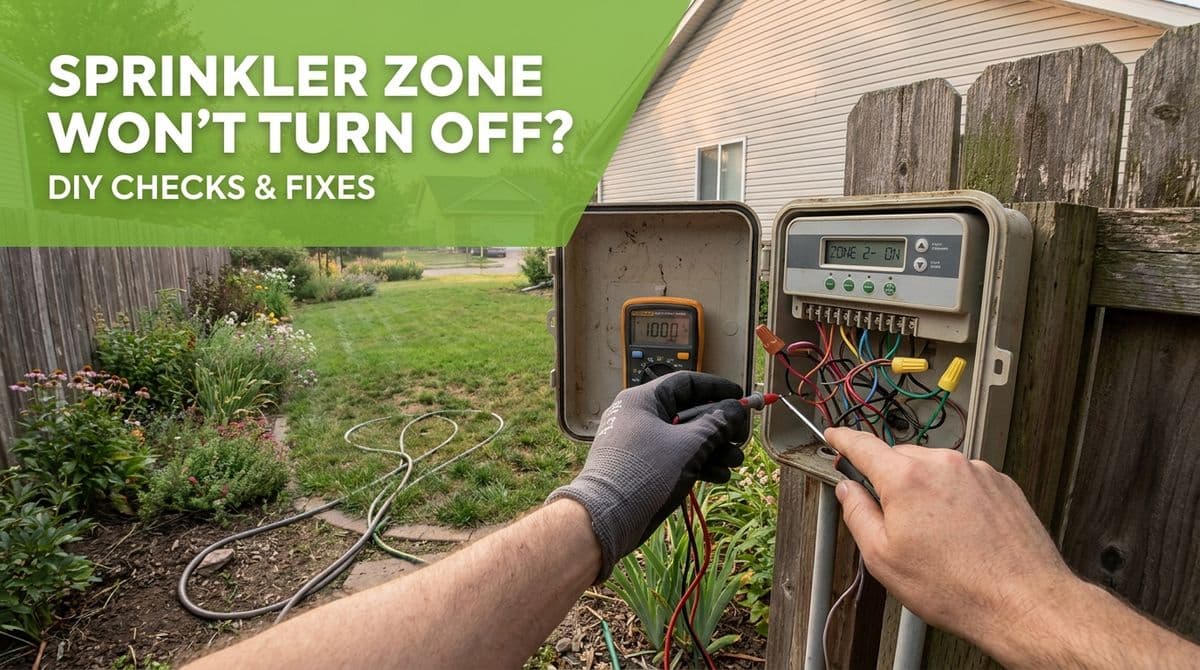
When a Sprinkler Zone Keeps Running With the Controller Off
We recently got a call from a new homeowner — let’s call her Kelly — who had just moved into an older house with an existing sprinkler system. She told us, “The system is off, but as soon as I turn the water on at the shutoff, one section of sprinklers pops up and just keeps running until I shut the water back off.”
She wasn’t even sure if the previous owners had winterized the system properly, and the controller settings were a mystery. From her description, we knew right away this wasn’t just a simple startup — it was a repair situation.
In this post, we’ll walk you through how we think through a problem like Kelly’s so you can safely do some basic troubleshooting on your own, and know when it’s time to call in a pro.
First Step: Make Sure It’s Really “Off”
Before assuming something is broken, we always start with the simple stuff. When a homeowner says, “The controller is off,” that can mean a few different things depending on the brand and age.
Here are a few things we walk customers through on the phone:
- Check for a “Rain” or “Off” mode – Many controllers have a system off or rain delay setting. Make sure it’s not just between programs or stuck in manual mode.
- Look for manual start buttons – Some older controllers have a physical switch or button for manual zone start that can get bumped and left on.
- Verify the correct time and day – If the clock is wrong, the controller may be running a schedule when you don’t expect it.
In Kelly’s case, even with the controller clearly set to “Off,” that one zone turned on the moment she opened the water supply. That tells us the problem is almost certainly in the valve, not the controller.
Why a Sprinkler Zone Can Run With the Controller Off
When a single zone runs constantly as long as there’s water pressure, we typically suspect one of these issues:
- Stuck or damaged valve diaphragm
- Debris in the valve from poor or no winterization
- Solenoid or wiring issue holding the valve open
- Valve manual bleed left open
Let’s break each one down and talk about what you can safely look at yourself.
1. Stuck Valve Diaphragm
Each sprinkler zone is controlled by an electric valve. Inside that valve is a flexible rubber diaphragm that opens and closes with water pressure and electric signals. If that diaphragm tears, warps, or gets pinched, the valve can stay partially or fully open all the time.
Signs this might be your issue:
- Only one zone runs constantly.
- Shutting off the main irrigation shutoff instantly stops it.
- The controller setting doesn’t change anything.
What you can safely do:
- Locate the valve box for that zone (usually a green or black plastic lid in the yard).
- Listen for water flow and feel for vibration in the suspect valve.
What we recommend leaving to a pro: Opening the valve, replacing the diaphragm, and putting it back together properly. Cross-threading, pinched gaskets, or debris can turn one problem into several.
2. Debris Inside the Valve (Often From Poor Winterization)
On the call, Kelly mentioned she didn’t know if the previous owners had winterized the system at all. When a system isn’t properly blown out, water, dirt, and debris can sit in the pipes and valves over winter. That can lead to cracked parts and grit inside the valve body.
How this causes a running zone: A tiny piece of grit can keep the diaphragm or internal ports from fully closing, so water sneaks by even when the controller is off.
DIY checks:
- Open the valve box and see if it’s full of muddy water — a sign of long-term leaks or poor drainage.
- Look for obvious damage like cracked valve bodies or fittings.
Cleaning and rebuilding a valve requires disassembly and re-sealing. That’s another one we generally recommend leaving to someone who does it all the time, especially if you’re on an older system with brittle plastic.
3. Wiring or Solenoid Issues
Each valve has a small electrical coil on top called a solenoid. When the controller sends power, the solenoid lifts a plunger inside the valve and lets water flow. If the solenoid fails, is stuck open, or is getting constant power because of a wiring short, the valve can stay open.
What you can check:
- With the controller truly off, look at the wiring connections in the valve box for that zone.
- Look for bare copper, corroded connections, or wire nuts full of water.
- Gently wiggle the solenoid to see if it’s loose or obviously cracked.
When to stop and call a pro: If you suspect wiring issues, especially if multiple wires are spliced and buried, testing for stray voltage and continuity is best left to someone with the right tools and experience.
4. Manual Bleed Screw Left Open
Most valves have a small manual bleed screw or a knob you can turn by hand to open the valve without using the controller. Sometimes a previous owner, contractor, or even a curious kid will turn this and forget to close it again.
DIY check (usually safe):
- With the water on and the controller off, locate the valve for the running zone.
- Look for a small screw or knob on the valve body labeled “manual” or “bleed.”
- Turn it gently clockwise a quarter turn at a time to see if the sprinklers shut off.
If that fixes it, you’ve found the easiest possible solution. If not, the problem is likely internal to the valve or electrical.
What You Should Not Do Yourself
We always want homeowners to stay safe and avoid turning a simple repair into a major one. Here are a few things we recommend you avoid unless you’re very confident and have experience:
- Digging up pipes around the valves – It’s easy to break nearby lines and fittings.
- Cutting and splicing new wiring without a basic understanding of low-voltage irrigation wiring.
- Pressurizing a system after winter without checking that all drains, caps, and backflow components are correctly positioned.
When to Call a Pro for a Runaway Sprinkler Zone
On Kelly’s call, we treated her situation as a startup/repair because we knew we might be dealing with both winterization issues and a stuck valve. That’s a common combination on older systems that have changed hands a few times.
You’ll want to call in a professional if:
- A zone runs any time the water is on, regardless of the controller setting.
- You’re not sure how (or where) to safely shut off the irrigation water.
- You see leaks, cracked fittings, or standing water in valve boxes.
- You’re uncomfortable opening or rebuilding valves yourself.
If you’re dealing with a sprinkler zone that just won’t stay off, we can walk you through a few quick checks over the phone, then come out prepared for both startup and repair — just like we did for Kelly — so your system runs when it’s supposed to, and stays off when it’s not.