Low-Maintenance Landscape Ideas for Your New Build
New-build yard? Learn how to combine patios, hydroseeding, prairie grasses, wildflowers, and dry creek beds into a beautiful, low-maintenance landscape.
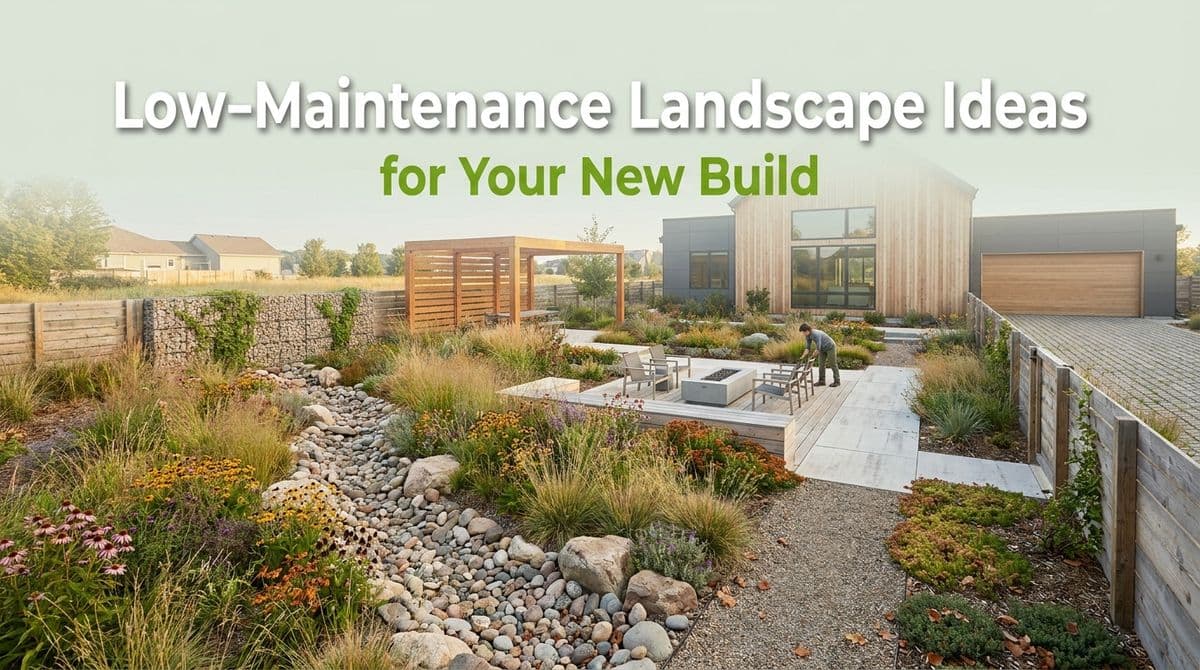
Designing a Low-Maintenance Landscape for a New Build
We recently got a call from a homeowner — let’s call her Lisa — who had just wrapped up building a new home. She and her husband had general-contracted the build themselves, and now they were staring at what a lot of new construction owners face: a beautiful new house surrounded by bare dirt and construction tracks.
Lisa told us they wanted to keep things low-maintenance, but not boring. On her wish list:
- A concrete or paver patio
- Some walkway paths
- Rock beds and a dry creek bed feature
- Hydroseeding with prairie grasses and wildflowers instead of a traditional lawn
If that list sounds a lot like yours, you’re not alone. More and more new-build homeowners are looking for landscapes that look natural, handle our local climate, and don’t require hours of mowing and watering every week.
Start with the Hardscape: Patios, Paths, and Practical Layout
On Lisa’s property, we started the conversation with hardscaping. That’s because concrete, pavers, and rock set the “bones” of the yard. It’s much easier (and cheaper) to tweak planting plans than it is to move a patio later.
Concrete Patio vs. Slab Pavers
Lisa was torn between a poured concrete patio and using individual slabs or block. Here’s how we helped her think it through — and the same questions you can ask yourself:
- Budget: Plain broom-finished concrete is usually more affordable upfront than large-format pavers. Decorative concrete, stamping, or staining narrows that gap.
- Style: If you like a clean, modern look, a single large concrete pad works very well. If you want something more “natural” that blends into prairie grasses and wildflowers, irregular slab or block paths can feel softer.
- Drainage: Pavers and slabs with joints allow a bit more water infiltration, which can help on sloped lots or near dry creek beds. Concrete needs thoughtful grading so water runs where it should.
For low maintenance, both are solid choices. Concrete has fewer joints for weeds to pop through. Pavers or slabs make future repairs or changes easier because we can pull up sections without a jackhammer.
Planning Walkways that Actually Get Used
Lisa also mentioned needing some walkway paths. With new builds, we always walk the property and ask a simple question: “Where will you actually walk every day?”
Some practical tips we shared with her:
- Connect the “musts” first: Front door to driveway, driveway to backyard gate, back door to patio or garbage area.
- Use curves with a purpose: Gentle curves around beds look great, but avoid tight S-curves that make pushing a wheelbarrow or snow blower a pain.
- Plan for snow and ice: In climates with winter, smooth, continuous surfaces (concrete or tight pavers) are easier to shovel than loose rock.
Hydroseeding with Prairie Grasses and Wildflowers
Instead of a carpet of bluegrass, Lisa was excited about hydroseeding with prairie grasses and wildflowers. It’s a smart option for large new-build lots, especially if you don’t want to spend your weekends mowing.
Why Hydroseeding Makes Sense on New Construction
Hydroseeding is a process where we spray a slurry of seed, mulch, fertilizer, and tackifier (a glue-like binder) over prepared soil. For new builds, that offers a few advantages:
- Even coverage over rough or sloped ground where hand-seeding is tricky.
- Faster establishment compared to dry seeding because the mulch helps hold moisture.
- Custom seed mixes tailored to prairie grasses, pollinator-friendly wildflowers, or low-mow blends.
With Lisa, we talked through her maintenance expectations. Native and prairie-style mixes are lower maintenance than a traditional lawn, but they are not zero maintenance — especially in the first year.
What to Expect with Prairie Grasses and Wildflowers
If you’re considering a similar approach, here are some honest expectations:
- Year 1: Lots of baby plants and lots of weeds. Plan on some mowing or trimming to keep fast-growing weeds from shading out slower prairie grasses.
- Year 2: Grasses start to fill in, early-blooming wildflowers show up, and weed pressure drops if the first-year care was done right.
- Year 3+: The area takes on that classic prairie look — swaying grasses with seasonal waves of color. Annual maintenance is usually just a late-winter mow or cut-back.
For a new build, we often recommend combining a small traditional lawn area near the house (for pets, kids, or outdoor games) with prairie-style areas farther out. That gives you function and low maintenance.
Using Rock and Dry Creek Beds for Drainage and Style
Lisa also asked about getting rock put down and adding a dry creek bed. This is where low-maintenance design and good drainage can work together really nicely.
Dry Creek Beds: Not Just for Looks
A dry creek bed is essentially a shallow, rock-lined swale that looks like a natural stream bed when dry and helps move water during heavy rains. For new construction sites that may have downspouts, sump pump discharge, or naturally low areas, they’re a smart solution.
When we plan these with homeowners like Lisa, we look at:
- Where water already wants to go: We follow the natural grade instead of fighting it.
- Entry and exit points: Capturing roof runoff, driveway drainage, or yard low spots and directing them to a safe outlet.
- Blend with plantings: Using drought-tolerant grasses and perennials along the edges so the creek feels like part of the landscape, not an afterthought.
Rock beds around the house can also cut down on mulch replacement and mowing, especially near foundations and along fence lines. We typically use a good landscape fabric or a thick base layer and the right size rock to reduce weed growth.
Phasing the Project to Fit Your Budget
One of Lisa’s big questions was whether they could do everything this year, or if we should phase it. That’s a very common concern with new builds where the budget has already been stretched.
Here’s the general priority list we walk through with homeowners:
- Drainage and grading: Make sure water flows away from the house and there are no obvious problem spots.
- Hardscaping: Patios, retaining walls, main walkways, and any needed access for equipment.
- Hydroseeding or base plantings: Stabilize the soil and keep erosion in check.
- Detail work: Additional beds, decorative boulders, lighting, and accent plantings.
For Lisa, we scheduled an on-site visit to walk the property, talk through these priorities, and then build a phased estimate so she could see what it would cost to do everything at once versus spreading it out.
Thinking About a Low-Maintenance Landscape for Your New Build?
If you’re standing on bare dirt around a brand-new house and trying to picture the future, combining hardscaping, hydroseeding, prairie grasses, wildflowers, and a dry creek bed can give you a landscape that’s beautiful, practical, and doesn’t eat your weekends.
The best first step is a walk-through on site. We’ll look at how you plan to use the space, how water moves across your lot, and how much maintenance you realistically want to take on — then design something that fits.