Lawn Edging 101: Clean, Crisp Borders That Last
Learn how we create clean, crisp lawn edges along sidewalks, driveways, and paver beds — and how to keep grass from creeping into your rock and pavers.
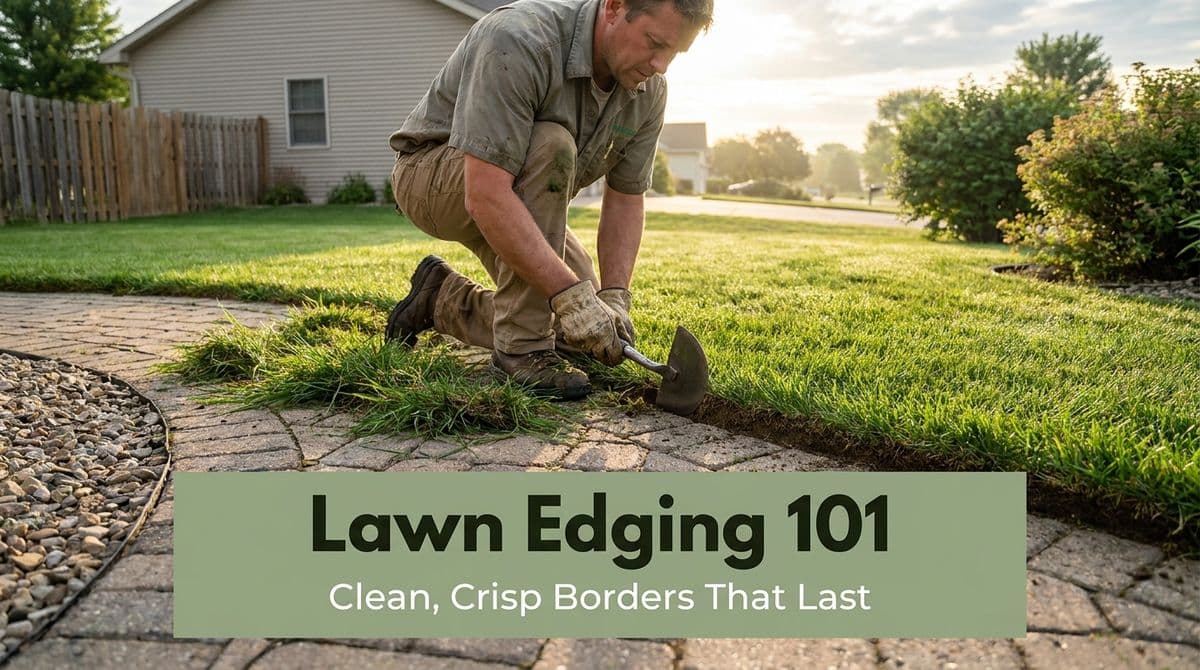
When “Tidying Up” Isn’t Enough: A Real Edging Call
We recently got a call from a homeowner — let’s call her Gina — who had spent her entire morning on her hands and knees fighting grass along her sidewalks and paver borders.
She told us, a little frustrated and a little exhausted, “I keep pulling the grass back from the pavers, cutting it, yanking it out of the rock… and it still creeps back in. I just want those crisp, squared-off edges along the driveway, sidewalks, and around our paver beds. Can you edge that?”
That question comes up more than you might think, and it usually starts with the same confusion: What’s the difference between trimming and edging, and how do you actually keep grass from invading rock and pavers?
In this post, we’ll walk through how we think about lawn edging, what we did (and recommended) for Gina’s yard, and how you can get those clean, crisp borders at your own home.
Edging vs. Trimming: Why It Matters
On Gina’s call, our first question back was, “Do you mean just cleaning up after the mow with a weed whacker, or the crisp, squared-off edging along the hard surfaces?”
That distinction is important:
- Trimming (string trimming) is what we do right after mowing. We use a line trimmer to knock down grass where the mower can’t reach — around posts, fences, and tight corners. It follows the shape of the grass and leaves a very natural look.
- Edging is a separate step with a different tool and goal. We cut a sharp vertical line where turf meets a hard surface — sidewalks, driveways, and landscape beds. It creates that clean, squared-off border you notice in manicured lawns.
Gina already had trimming happening, but her sidewalks and driveway still looked “fuzzy” and overgrown. That’s where true edging comes in.
Where We Edge: Sidewalks, Driveways, and Landscape Beds
When we provide edging, we follow a similar description to what we read to Gina over the phone: “Edging along turf, sidewalks, curved driveways, and landscape beds to sharpen and clean borders.”
In practical terms, that usually includes:
- Sidewalks and front walks – removing that thin strip of grass and soil that creeps out over the concrete.
- Driveways – especially curved or long drives where grass can quickly blur the line between lawn and pavement.
- Curved landscape beds – along rock beds, mulch beds, and paver borders to create a defined line between turf and landscape materials.
In Gina’s case, the biggest headache was those little paver stones used as borders around her rock and shrubs. The grass kept sneaking under and between them, even with plastic underneath. We hear that a lot.
How We Edge Paver Borders and Rock Beds
Here’s how we typically handle the kind of setup Gina described — paver edging around beds with rock or mulch on the other side:
- Cut a vertical edge along the turf side. We use a powered lawn edger (or a flat spade in tight spots) to cut a clean vertical line right where the grass meets the paver or bed. This severs the surface grass and a bit of root zone.
- Level the turf to the paver height. When possible, we bring the grass line level with the top of the pavers so the border looks neat instead of “mounding” over the stones.
- Clear debris from joints and rock. We remove the soil and grass that have crept into rock or paver joints so the border actually looks like a border again.
- Optionally add a root barrier. Gina asked if she could install those small plastic barriers you hammer into the lawn to slow root invasion. That’s a smart strategy. A shallow barrier just below turf level can significantly reduce how quickly grass creeps under pavers.
Is it a “set it and forget it” fix? Not quite. Grass is persistent. But with a solid initial edge and a simple maintenance routine, you get out of the all-morning-on-your-knees cycle.
Tools We Recommend for Homeowners
You don’t need a full commercial setup to get professional-looking edges. For most homeowners, we recommend:
- Manual half-moon edger – Great for first-time edging or small areas. You step on the blade to slice a vertical line along sidewalks or beds.
- Gas or battery-powered edger – Best for long sidewalks and driveways. A dedicated edger with a metal blade makes fast, consistent cuts.
- Flat garden spade – Useful for redefining curved beds and cutting out encroaching turf clumps.
- Hand weeder or narrow trowel – For removing grass that’s already rooted into rock or between pavers.
- Optional: plastic or metal landscape edging – Installed just below turf level to slow root creep where grass meets rock or pavers.
Safety Tips While Edging
Whether you DIY or just want to understand what we’re doing on your property, safety is huge when you’re cutting right along concrete and rock:
- Wear eye protection. Edgers kick up small stones, bits of concrete, and soil. Safety glasses are a must.
- Closed-toe shoes and long pants. Your feet and shins are close to the action; protect them from debris.
- Watch for utilities and sprinkler heads. Don’t edge deeply over irrigation lines or near visible heads and valve boxes.
- Go shallow at first. Especially if you’re new, start with a lighter pass and deepen only as needed. You don’t need a trench — just a crisp vertical cut.
How Often Should You Edge?
Another thing we walked through with Gina was expectations. She’d been hoping for a “do it once and be done” solution, but edging is more like haircuts: it’s maintenance.
As a rule of thumb:
- Growing season (spring through early fall): Edge every 2–4 weeks for the cleanest look, especially on fast-growing turf.
- Cooler months: You can stretch it out. Once the lawn slows down, the edges will hold their shape longer.
- After the first deep edge of the year: Maintenance passes go much faster and remove less material — you’re just recleaning the line.
If you’re doing it yourself, consider a deep, careful edge in spring, then lighter touch-ups through the season. That’s essentially the same pattern we follow on our maintenance routes.
Common Edging Mistakes We See
When we arrive at a new property, we often see the same few issues that make edging harder than it needs to be:
- Using only a string trimmer and tilting it vertically. It works in a pinch, but it’s inconsistent and can scalp the turf, leaving ragged edges and bare spots.
- Cutting too wide or too deep. A narrow, vertical line is all you need. Deep trenches collect water and weeds and can cause the edge to crumble.
- Ignoring paver and rock interfaces. Homeowners clean the sidewalk edges but skip the bed edges, so grass silently invades the rock and pavers from behind.
- Letting it go all season. Once the grass has grown several inches over concrete or into rock, reclaiming the edge becomes a much bigger project.
Pairing Edging With Other Lawn Services
On the same call, Gina also asked about aeration and whether that could bring in problem grasses from a neighbor’s yard. We walked her through how aeration pulls small soil cores, helps roots grow deeper and stronger, and how, if there are dormant weed seeds in the soil, aeration can sometimes wake those up too.
That’s why we often recommend pairing aeration with fertilization and weed control — so as we strengthen the turf, we’re also discouraging unwanted grasses. A healthy, thick lawn will support your clean edges and make it harder for weeds to establish along borders.
When to Call in a Pro
If your yard feels a bit like Gina’s — long sidewalks, big driveways, paver borders around most of the house — edging can turn into an all-day project. That’s when it can make sense to bring in a crew that does this every day.
Here’s how we typically approach a first-time edging visit:
- Walk the property with you and identify every turf-to-hard-surface edge.
- Do a deep, initial edge along sidewalks, driveways, and landscape beds.
- Clean up debris so concrete and pavers look sharp and tidy.
- Recommend simple maintenance steps you can handle between professional visits.
Whether you decide to DIY or have us handle it, a sharp edge around your sidewalks, driveway, and paver beds makes a bigger visual impact than almost any other quick lawn task. With the right tools, a bit of know-how, and a regular routine, you can finally win that “nonstop battle” with creeping grass — and get your weekends back.