How Spring Sprinkler System Startups Work
Learn what happens during a spring sprinkler startup, common issues we find, and why route-based scheduling changes your exact service time.
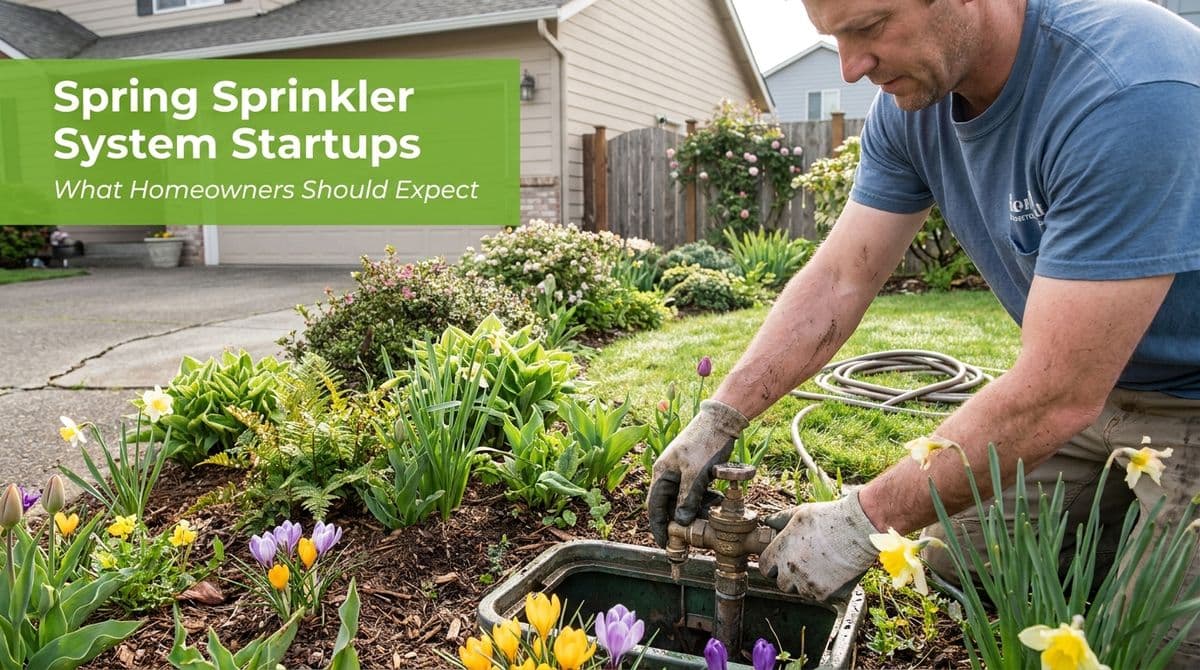
What Really Happens During a Spring Sprinkler Startup
We recently got a call from a homeowner — let’s call him Brian — who asked a question we hear a lot this time of year:
“Do you do sprinkler system startups… and what day and time can you come?”
Brian already had a note on our schedule, but he wasn’t sure what to expect or when, exactly, we’d arrive. That gave us a great chance to walk him through how spring sprinkler startups really work, why we schedule by route instead of exact clock times, and what homeowners should expect when we turn their systems back on after winter.
Why We Schedule Startups by Route, Not Exact Time
On the phone, Brian was hoping for a precise appointment like “Thursday at 9:30 AM.” Instead, we explained that for sprinkler startups, we run our crews on a route-based schedule.
Here’s why that matters:
- Every yard is different. Some systems fire right up. Others have broken heads, leaks, or valve issues that need same-day repairs.
- Repairs change the timeline. If we find a problem at a stop before yours, we don’t want to leave that homeowner with a flooded yard or a dead zone of brown grass. Fixing it can add 20–60 minutes (or more) to that visit.
- Weather can slow things down. Cold snaps, heavy rain, or ground that’s still frozen can affect how quickly we can safely start systems.
Because of all this, we place you on a route for a given day and give you a window like “late morning” or “early afternoon” instead of guaranteeing an exact time. As we told Brian, we can usually give a good estimate based on where you fall along that day’s route, but it’s still an estimate.
What to Expect the Day of Your Sprinkler Startup
Brian also wanted to know what we actually do during a startup visit. Here’s the basic process we walked him through, so you’ll know what to expect at your home too:
- Turn on the main water supply slowly. We never just throw the valve wide open. Bringing pressure up slowly helps prevent burst pipes and damaged fittings.
- Check the backflow preventer. This device keeps sprinkler water from flowing back into your home’s drinking water. We inspect it for leaks and proper operation.
- Run each zone, one at a time. We go through every zone at the controller and watch what’s happening in the yard.
- Inspect heads and coverage. We look for clogged, tilted, or broken sprinkler heads, and see if each zone is watering where it should — and not hitting sidewalks or windows.
- Look and listen for leaks. Soft, soggy spots, hissing sounds, or unusually low pressure in a zone can signal an underground leak or broken fitting.
- Set a basic seasonal schedule. We’ll help set run times that make sense for spring, with the option to adjust later as the weather warms up.
Most straightforward startups go quickly. It’s when we find problems in one of these steps that things take longer — and that’s exactly why we route our days with flexibility built in.
Common Issues We Find During Spring Startups
On Brian’s call, we mentioned that sometimes our crews arrive planning just to start a system, and end up doing repairs too. A few of the most common spring issues include:
- Cracked backflow preventers from freezing temperatures
- Busted or leaning sprinkler heads from snow plows, mowers, or foot traffic
- Leaking valves or fittings that show up as persistent soggy areas
- Zones not turning on because of wiring or controller problems
- Poor coverage patterns leading to dry patches and overwatered spots
When we find something like this, we’ll talk it through with you on the spot, give options, and, when possible, repair it during the same visit. That’s great for you — your system gets fully ready for the season — but it also means the next stops on the route might run a little later.
How Routing Affects Your Appointment Time
Back to Brian’s original concern: “If I’m on the schedule for Friday, does that mean you’ll actually start my system Friday?”
Here’s how we explained it to him, and how we approach all spring startup routes:
- You’re booked for a specific day’s route. That means you’re on our list for that day, usually morning or afternoon.
- We work the route in a logical order. We group homes by area to save drive time and keep costs reasonable.
- Exact time depends on earlier stops. If everything goes smoothly, we may be earlier than expected. If we run into complex repairs, we may slide later in the window.
We always do our best to keep you informed if there’s a significant delay. When you book, ask where you fall on the route — early, middle, or late — and we can usually give you a ballpark time frame.
How to Get the Most Out of Your Startup Visit
If your home is on our spring route, here are a few ways to help the visit go smoothly and efficiently:
- Clear access to the sprinkler shutoff, backflow, and controller.
- Make sure power is on to the controller and any pump, if you have one.
- Have questions ready about dry spots, high bills, or coverage issues you noticed last year.
- Be available by phone in case we need quick approval for a repair.
That way, when your turn on the route comes, we can spend our time solving problems instead of hunting for valves or tracking you down for decisions.
Need Your Sprinklers Started This Spring?
Brian left that call with a much clearer picture of what to expect: he knew which day he was on our route, roughly when we’d arrive, and what we’d be checking once we got there.
If you’re looking to get your sprinkler system started up for spring, we’ll walk you through the same process — from setting your day on the route to checking every zone for a healthy, efficient watering season.