New Homeowner’s Lawn Rescue Plan: Year-Long Guide
New to your yard? Learn how to assess your lawn, ID your grass, and map out a simple year-long plan for power raking, overseeding, fertilizing, and weed control.
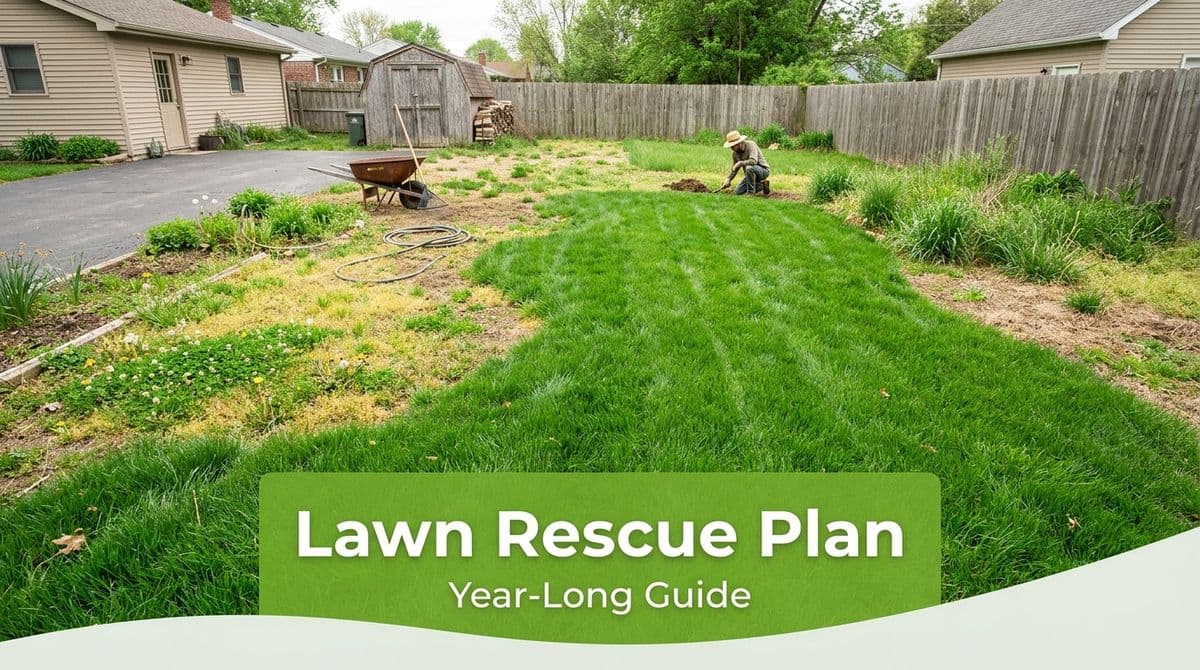
New homeowner, rough lawn: where do you even start?
We recently got a call from a new homeowner — let’s call him Mark — who had the same question we hear every spring:
“I just moved in. The yard’s bumpy, there are bare spots, I think I need power raking, maybe overseeding, maybe a soil test… I don’t even know what kind of grass I have. Can you help me put together a long-term plan?”
We loved that question, because that’s exactly how a lot of people feel with their first yard. Mark didn’t just want a quick “mow and go.” He wanted a year-round rescue plan to get his lawn healthy and keep it that way.
In this post, we’ll walk you through the same step-by-step process we use with new homeowners: how to assess your yard, figure out your grass type, and map out a realistic 12‑month schedule for power raking, overseeding, fertilizing, and weed cleanup.
Step 1: Walk your lawn like a pro
Before we talk products or schedules, we do what we did with Mark: a simple, slow walk-through of the entire yard.
Here’s what we look for — and what you can check yourself:
- Bare spots and thin areas – Where soil is showing or grass is wispy.
- “Bowls” or low spots – Areas that collect water or feel squishy after rain.
- Compacted areas – Usually along sidewalks, driveways, or where kids and pets travel.
- Weed zones – Especially along easements, fences, and the back property line.
- Sun vs. shade – Note where your lawn gets full sun, part sun, or heavy shade.
As Mark described, he had some “bowls” and a weedy easement behind the property where he planned to put a fence. That told us two things right away: we’d need to address drainage and compaction in the main lawn and serious weed cleanup in the back.
Step 2: Identify your grass type (without guessing)
Mark also wasn’t sure what kind of grass he had, which is more common than you’d think. The type of grass matters because it affects when you power rake, overseed, and fertilize.
In our area, lawns are usually one or a mix of these cool-season grasses:
- Kentucky bluegrass – Deep green, spreads via underground stems, forms a dense carpet.
- Perennial ryegrass – Shiny blades, germinates fast, often used in mixes for quick cover.
- Fine fescue – Thinner blades, good for shade, softer, sometimes a lighter green.
Here’s how we suggest homeowners like Mark get a good idea of what they’re working with:
- Look closely at the blades – Are they wide or narrow? Shiny or matte? Pointed or more rounded?
- Check several spots – Front, back, shady side, sunny side. You may have a mix.
- Take clear close-up photos – If you’re working with a lawn pro, we can often ID species from pictures or in-person.
You don’t need a perfect botanical ID to succeed, but knowing whether you mainly have cool-season grass (like those above) or warm-season grass (like bermuda or zoysia in hotter regions) will determine the best timing for your rescue plan.
Step 3: Do you really need a soil test?
Like Mark, a lot of people ask us if they “need” a soil test before overseeding. Our answer:
- Highly recommended if your lawn is struggling, you’ve just moved in, or you don’t know the yard’s history.
- Especially important if you see moss, poor drainage, or lots of weeds but thin grass.
A basic soil test (through your local extension office or a private lab) tells you:
- pH level (too acidic or too alkaline)
- Nutrient levels (nitrogen, phosphorus, potassium, and more)
- Whether you need lime, sulfur, or specific fertilizers
For Mark, we recommended a simple soil test before we locked in a fertilizing plan. That way, we’re not guessing — we’re feeding the lawn exactly what it needs.
A simple year-long schedule for cool-season lawns
Once we understood Mark’s yard and grass type, we walked him through a 12‑month lawn calendar. Here’s the same basic framework you can adapt to your own yard (this is for cool-season lawns; warm-season grasses shift later into spring and summer).
Early spring: wake-up and cleanup
- Light rake to remove leaves and debris.
- Check thatch depth – If the spongy layer above the soil is more than about 1/2 inch, plan on power raking.
- Soil test if you haven’t done one.
Power raking/dethatching: As we explained to Mark, we usually schedule this in spring for cool-season lawns. It’s a once-in-a-while service, not every year forever. Overdoing it can actually stress the grass.
Late spring: feed and prevent weeds
- Apply a balanced fertilizer matched to your soil test.
- Use a pre-emergent weed control if you struggle with crabgrass (timing is critical).
- Start a consistent mowing schedule, never removing more than 1/3 of the blade at a time.
Early fall: overseeding and repair
For cool-season lawns, early fall is prime time for overseeding. This is when we told Mark to focus on thickening his lawn.
- Aerate compacted areas (especially where you found “bowls”).
- Overseed right after aeration, using a grass blend that matches your existing lawn and sun/shade conditions.
- Apply a starter fertilizer to support seed germination.
Keep the top layer of soil consistently moist until new grass is established. That might mean light, frequent watering at first.
Late fall: winter prep
- Apply a late-fall fertilizer (often high in nitrogen) to help grass store energy for winter.
- Do a final mow slightly shorter than usual to reduce snow mold risk.
Dealing with weedy easements and fence lines
Like Mark, many new homeowners inherit a messy easement or a wild strip along the back fence. Those areas can be major weed seed factories for the rest of your yard.
Here’s how we typically tackle them:
- Cut everything down first so you can see what you’re dealing with.
- Targeted herbicide for stubborn invasive weeds (applied carefully and legally, especially on easements).
- Remove debris and, if needed, add a layer of rock, mulch, or low-maintenance plantings.
- Coordinate with fence installation so cleanup happens before posts and panels go in.
Once those areas are cleaned up, your main lawn has a much better chance of staying thick and weed-resistant.
When to DIY and when to call in help
Mark’s instinct was right: sometimes it really does help to have someone walk the yard with you and lay out a clear plan. You can absolutely DIY pieces of this — mowing, watering, even overseeding — but a pro can:
- Confirm your grass type and tailor seed blends.
- Run or interpret a soil test so fertilizer isn’t guesswork.
- Handle power raking, aeration, and weed control with the right equipment and timing.
- Build a year-long schedule that fits your yard and your budget.
If you’re standing in your new yard wondering where to begin, you’re not alone. Start with a slow walk, take notes like we did with Mark, and sketch out your year using the steps above. And if you’d like us to be your “lawn coach” for that first season, we’re always happy to stop by, take a look, and build a rescue plan together.