How to Fix Weedy, Bare Lawn Strips Along Fences
Struggling with weedy, bare strips along your fence? Learn how aeration, overseeding, and targeted weed control can thicken grass and block invaders.
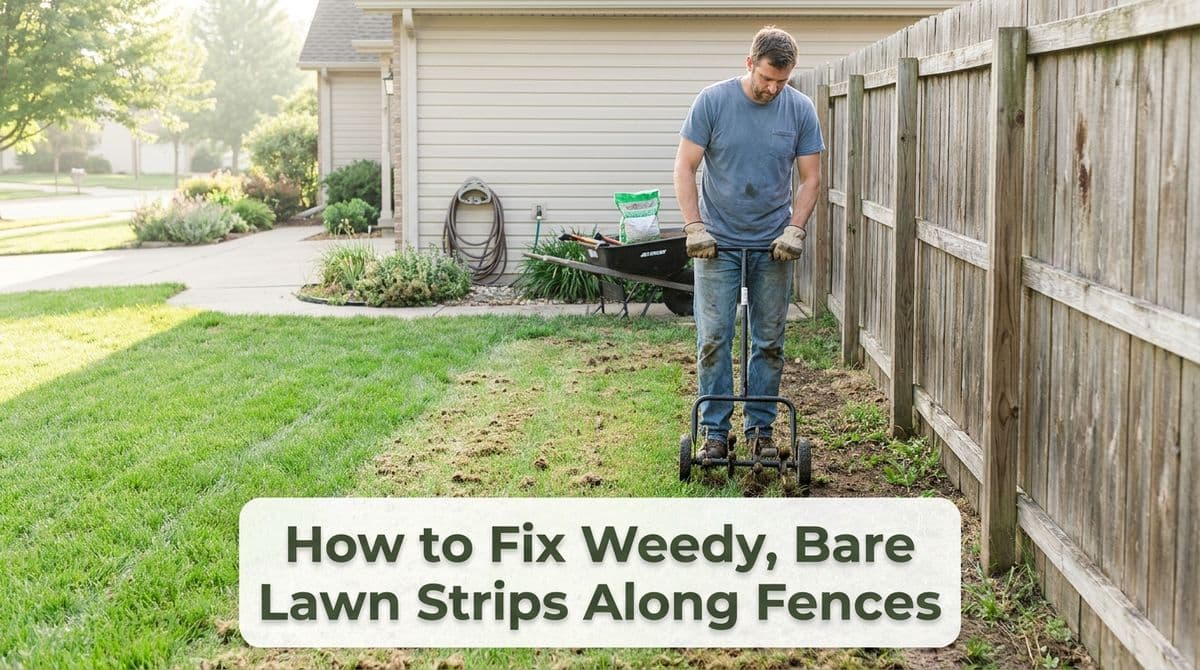
Fixing Weedy, Bare Lawn Areas Along Fences
We recently got a call from a homeowner — let’s call him Brian — who was frustrated with the strip of lawn running along his white fence. He’d tried tossing down what he thought was ryegrass seed, but now that area looked patchy, weedy, and, in his words, “like garbage.”
On top of that, there was an empty lot on the other side of his fence. Thistles and other weeds were creeping underneath and popping up in his yard, especially along the fence line and in his rock beds. He wanted to know if he needed to rip everything out and start over, or if overseeding, weed control, and maybe some fertilizer would be enough.
We hear this story a lot. Fence lines are one of the toughest spots to keep thick, green, and weed-free — but with the right combination of aeration, overseeding, and weed control, most homeowners can turn those areas around without installing new sod.
Why Fence Line Lawns Get Weedy and Bare
Before we gave Brian recommendations, we asked him a few key questions about his yard. The issues he described are common along fences for a few reasons:
- Compacted soil: Fences are often installed with heavy equipment, which compacts the soil along that line and makes it hard for grass roots to grow.
- Shade and competition: Fences can cast shade or block airflow, and nearby trees or shrubs may compete for water and nutrients.
- Weed invasion from neighboring lots: Just like Brian, many homeowners back up to empty lots. Weed seeds (especially thistles and crabgrass) blow or creep under the fence and take over thin grass.
- Poor seed choice or quick fixes: Tossing down a random grass seed once, without soil prep or follow-up care, usually leads to weak, inconsistent growth.
Our goal with Brian was simple: loosen the soil, thicken the turf, and keep weeds from winning the race. That’s where aeration, overseeding, and weed control come in.
Aeration: Giving Your Fence Line Soil Room to Breathe
We told Brian that nine times out of ten, bare areas respond best when we start with core aeration. Aeration removes small plugs of soil and thatch, opening channels for air, water, and nutrients to reach the root zone.
Here’s how homeowners can approach it along fences:
- Use a core aerator, not spikes. Core aerators pull out plugs; spike tools just push soil around and can increase compaction.
- Make extra passes along the fence. Those compacted bands need more holes per square foot than the open lawn.
- Leave the plugs on the surface. They’ll break down and help improve the soil structure over time.
We like to schedule aeration when the grass is actively growing — spring or early fall for cool-season lawns — so it recovers quickly and is ready for new seed.
Overseeding: Thickening the Grass Where Weeds Are Winning
Once the soil is opened up, we move to overseeding. With Brian, we added aeration and overseeding to his estimate because that combination is usually what brings those “bald spots” back.
For homeowners overseeding along fences, we suggest:
- Choose the right grass seed. Match your existing lawn type (for example, a turf-type fescue/bluegrass blend for many cool-season lawns). Avoid cheap “contractor mix” with lots of annual rye.
- Prep the surface. After aeration, rake out any dead material so seed can contact soil, especially in the thinnest spots right next to the fence.
- Seed a little heavier along bare strips. Follow the bag’s overseeding rate for the main lawn and increase slightly along the worst areas.
- Keep it consistently moist. Light, frequent watering (1–2 times per day for the first couple of weeks) is better than occasional heavy soakings.
We reminded Brian that overseeding isn’t a one-and-done magic trick. The first round usually makes a big difference, but many fence lines benefit from annual aeration and overseeding for a few seasons until the turf is truly dense.
Weed Control Options: Thistles, Crabgrass, and Fence Line Invaders
Brian’s other big headache was weeds sneaking in from the empty lot behind his fence — especially thistles and crabgrass. That’s where a good fertilization and weed control program becomes important.
We typically recommend a mix of:
- Pre-emergent control: Applied early in the season to prevent crabgrass and some other annual weeds from germinating.
- Post-emergent spot treatments: Targeted sprays on existing broadleaf weeds (like thistles and dandelions) so we’re not bathing the whole yard in herbicide.
- Regular fertilization: Healthy, well-fed grass crowds out weeds naturally. We usually bundle fertilizer with weed control in the same visit.
For Brian, we also suggested spot spraying in problem areas — along the fence, in rock beds, and anywhere weeds creep in from the neighboring property. On our end, that kind of service is usually billed hourly, while fertilization and standard weed control are priced by square footage.
Dealing With Rock Beds and Weed Barriers
During our call, Brian mentioned he was planning to pull out his old weed barrier in the rock beds and replace it. We see this a lot: fabrics fail over time, soil and debris collect on top, and weeds root right in that layer.
Here’s what we usually recommend around fences and rock beds:
- Remove old, torn barrier. Once it’s full of holes and covered in soil, it’s not doing much.
- Clean out accumulated debris. Scoop out as much soil and organic matter as possible before re-rocking.
- Use a quality barrier or plan for ongoing spot sprays. Even the best barrier won’t stop every weed, so we pair it with periodic spot treatments, especially along fence edges where weeds creep underneath.
We added spot spraying to Brian’s estimate for these “problem zones” so we could stay ahead of the weeds trying to jump from the empty lot into his yard.
Putting It All Together for Your Fence Line
When we send estimates like Brian’s, we itemize each service so homeowners can see what’s what — aeration, overseeding, fertilization/weed control by square footage, and hourly spot spraying for tough areas. You can take a similar step-by-step approach in your own yard:
- Address compaction: Aerate heavily along the fence line.
- Overseed smart: Use quality seed, good soil contact, and consistent watering.
- Control weeds: Combine pre-emergent, targeted post-emergent, and regular fertilization.
- Tidy beds and barriers: Clean rock beds, replace failing weed fabric, and spot spray invaders.
With a season or two of steady attention, even those rough strips by the fence can turn from weedy eyesores into thick, green borders that match the rest of your lawn. If you’re looking at your own fence line and wondering whether it needs a full redo or just some focused aeration, overseeding, and weed control, we’re always happy to walk through the options with you.